

At What Age Should Kids Start Fasting? A Gentle Guide for Muslim Parents
When should kids start fasting: what Islam requires, what the Companions did with their children, and how to build your child’s first fasts step by step – with love, not pressure.
Fasting in Ramadan becomes obligatory when a child reaches puberty. Before that, it is not required – but most families gently train children from around age 7 to 10 with half-days and short fasts, so that by puberty fasting feels natural. The right age for your child depends on their health, maturity and enthusiasm.
In this guide
What Islam requires
Scholars agree that fasting Ramadan is obligatory on every Muslim who is mature (has reached puberty), sane and able. A child who has not reached puberty is not sinful for not fasting. Training is encouraged, though, just as parents are taught to start salah with their children from age seven.
Good to know: signs of puberty vary a lot – for some girls as early as 9 or 10. Talk about it calmly before Ramadan so your child knows when fasting becomes their own responsibility.
How the Companions trained their children
The Companions made fasting a family practice. Ar-Rubayyi’ bint Mu’awwidh described the fast of Ashura in Madinah:
“We would fast it and make our children fast. We would make toys of wool for them, and when one of them cried for food, we gave him the toy until it was time to break the fast.”
Sahih al-Bukhari 1960 · Sahih Muslim 1136
Two lessons stand out: children were included in the family’s worship, and parents used distraction and kindness – not harshness – to help them through.
Age-by-age guide
Ages 3–5: join the atmosphere
Wake up for a short suhoor on weekends, help prepare iftar, say the iftar dua. “Fasting” can mean skipping a snack until lunch.
Ages 6–8: half-day fasts
Fast from suhoor until lunch (or until Dhuhr) a few days a week. Celebrate each one.
Ages 8–10: weekend full fasts
One or two full fasts on weekends, plus half-days on school days if they wish.
Ages 10+: most of the month
Many children can fast most days, with flexibility for sports, exams or illness – until puberty, when it becomes obligatory.
Planning your child’s first full fast
Pick a weekend day
No school, no sports, a calm schedule and you nearby.
Make suhoor count
Oats, eggs, whole-grain bread, fruit and plenty of water. Avoid very salty or sugary foods.
Plan a gentle afternoon
Reading, a nap, a quiet activity book – the last two hours are the hardest.
Let them help with iftar
Setting the table keeps their mind busy and makes the moment theirs.
Celebrate!
A certificate, a special dessert or a phone call to grandparents. Make the memory sweet.

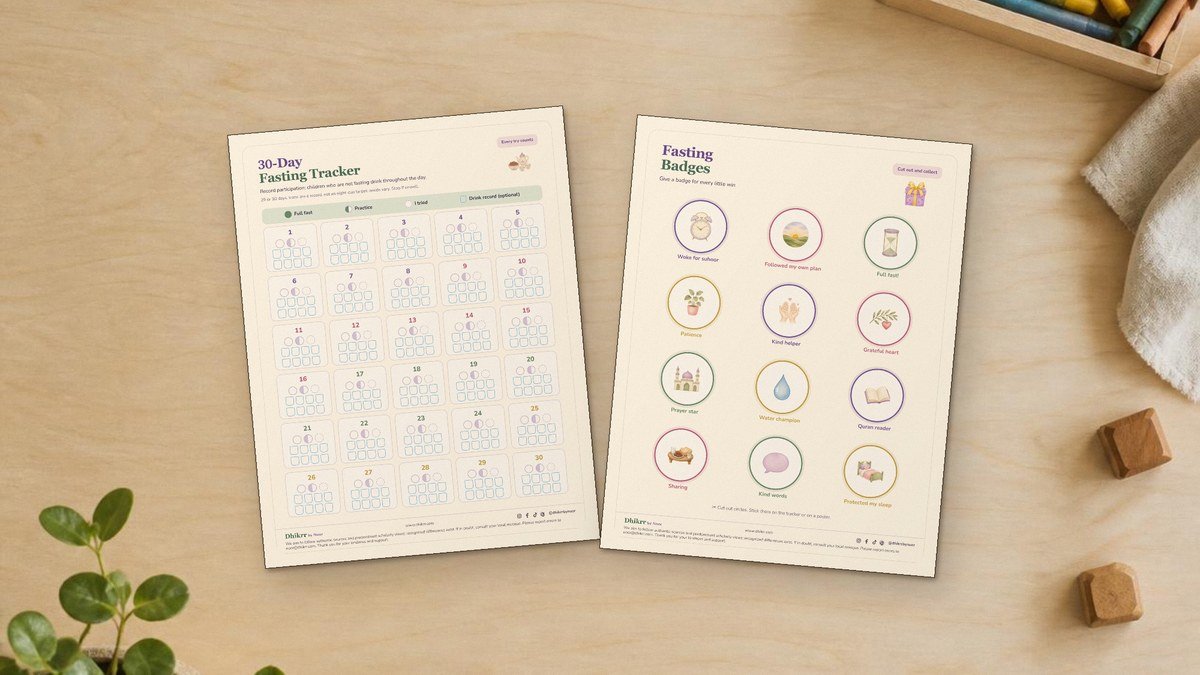
First fasts tracker inside
Ramadan Activity Book for Kids
Daily activities, a “my first fasts” tracker, good-deed challenges and an Eid certificate to celebrate your child’s effort.
See the activity bookHealth & safety first
- Children who are ill, on medication or have conditions like diabetes should not fast without medical advice.
- Break the fast immediately if your child is dizzy, confused, very weak or stops urinating – dehydration is the main risk.
- Hydrate well between iftar and suhoor: water, soups, fruit like watermelon and oranges.
- Never shame a child for breaking a voluntary fast. The goal is love of worship, not endurance.
Parent tip
Praise the effort, not the hours: “You tried so hard today, Allah loves that” builds more motivation than “You only made it to lunch.”
Fasting at school in the US
For most of the 2020s Ramadan falls during the school year, so plan ahead:
- Tell the teacher before Ramadan starts – many schools offer a quiet space at lunch.
- PE and sports: ask for lighter participation on fasting days, especially for younger children.
- Half-days on school days are a perfectly good choice before puberty.
- Talk about classmates’ questions so your child feels proud, not awkward, explaining why they fast.
Frequently asked questions
Is it obligatory for a 7-year-old to fast?
No. Fasting becomes obligatory at puberty. Before that, it is training – encouraged, but always adapted to the child’s ability.
Can kids fast half a day in Ramadan?
Yes. A half-day fast is a common and healthy way to train younger children. It is not a “complete” fast in Islamic law, but it builds the habit and the love of fasting.
What if my child breaks their fast by accident?
If a fasting person eats or drinks out of forgetfulness, they simply continue their fast (Sahih al-Bukhari 1933). Teach this to your child – it is a beautiful lesson in Allah’s mercy.
How do I encourage a child who doesn’t want to fast?
Don’t force it before puberty. Involve them in suhoor and iftar, share the stories of the Companions’ children, and offer a small challenge (until Dhuhr) with a celebration afterwards.

We create authentic, beautiful Islamic tools for Muslim families. This article is general guidance – ask your local imam for personal rulings and your pediatrician for health questions.