
How to Teach a Child to Pray Salah, Step by Step
How to teach a child to pray: from copying you on the prayer mat to praying all five on their own – a calm, age-by-age plan that builds love, not battles.
Teach a child to pray in three stages: let them copy you from as young as 3–4, start teaching the steps properly around 7 as the Prophet ﷺ advised, and build consistency toward 10. Teach wudu first, then the positions one at a time, explain what the words mean – and make prayer a warm family moment rather than a chore.
In this guide
What the Sunnah tells parents
“Command your children to pray when they are seven years old.”
Sunan Abi Dawud 495 (hasan)
Seven is the age to start instructing – not the age to start loving prayer. Children who have seen their parents pray, stood next to them and heard “Allahu Akbar” for years find it natural when the time comes.
The three stages
Ages 3–6: copy and belong
Give them their own small prayer mat. Let them stand beside you, bow and prostrate. No corrections – just joy.
Ages 7–9: learn the steps
Teach wudu, then one rak’ah, then the full prayers. Start with one or two prayers a day, then build up.
Ages 10+: own the habit
All five prayers, on time, with growing independence. Praise consistency and help with reminders.
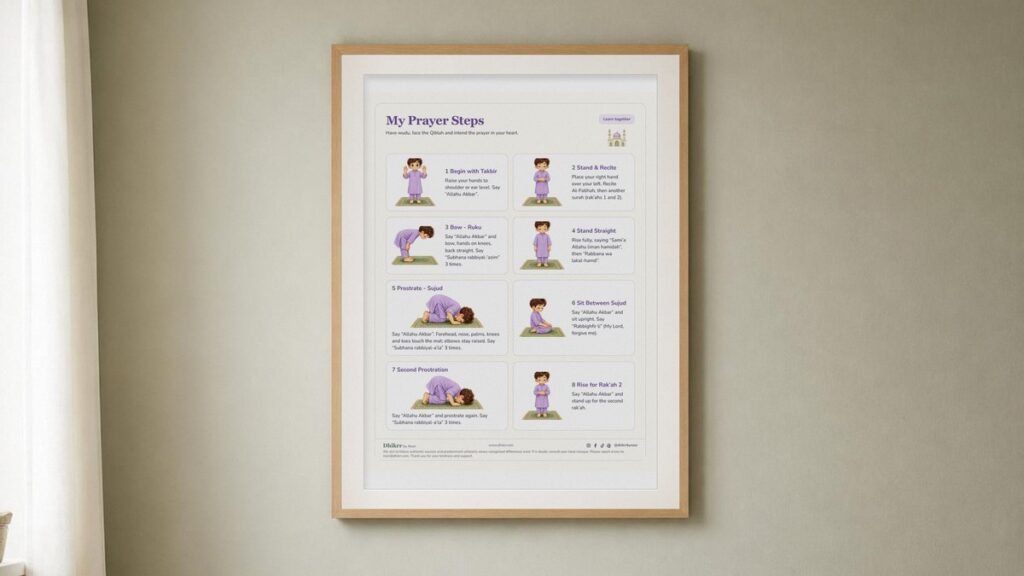
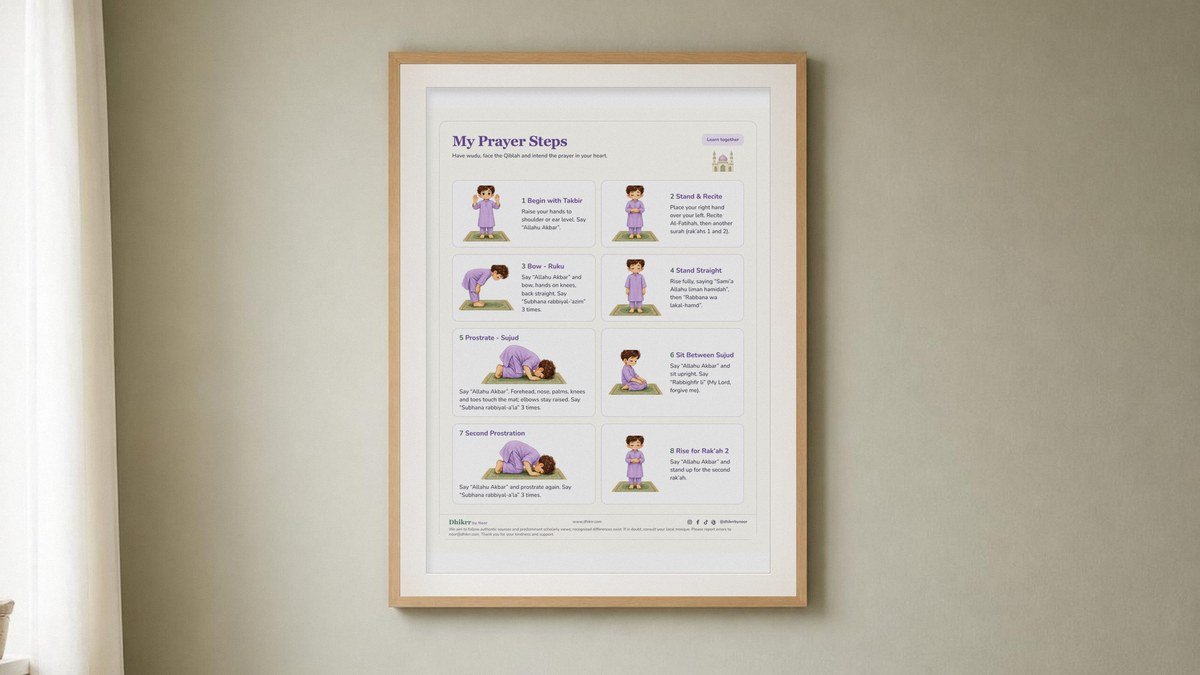
Teaching the prayer step by step
Wudu first
Purification comes before prayer. Teach it slowly at the sink – see our guide on how to make wudu for kids.
Takbir & standing
Hands to the ears, “Allahu Akbar”, right hand over left, recite Al-Fatihah.
Ruku
Bow with a straight back: “Subhana rabbiyal-‘azim” three times.
Sujud
Forehead, nose, palms, knees and toes on the floor: “Subhana rabbiyal-a‘la”.
Sitting & tashahhud
Sit between the prostrations, then learn the tashahhud and finish with salam to the right and left.

Free printable
How to Pray Salah – Free Kids Poster
15 illustrated steps from takbir to salam, with what to say in each position. Free by email.
Get it freeParent tip
Teach one position per week and practice it in “mini prayers”. Children remember movements quickly – words take longer. A printed poster at eye level helps them check the next step on their own.
Teach the meaning, not only the moves
The most common mistake is teaching the mechanics without the heart. Say it simply: “When we say Allahu Akbar, we mean Allah is greater than everything – greater than my game, my homework, my worries.” And: “In sujood, we are the closest we can ever be to Allah. You can ask Him for anything.”
“The closest that a servant is to his Lord is when he is prostrating, so increase your supplication.”
Sahih Muslim 482
Motivation that lasts
- Pray together whenever possible – especially Maghrib and Isha at home.
- Use a tracker: a star for every prayer, celebrated at the end of the week.
- Praise effort, never shame a missed prayer.
- Connect it to dua: after salah, let them ask Allah for something that matters to them.
- Take them to the masjid for Jumu’ah and Taraweeh – belonging is powerful.
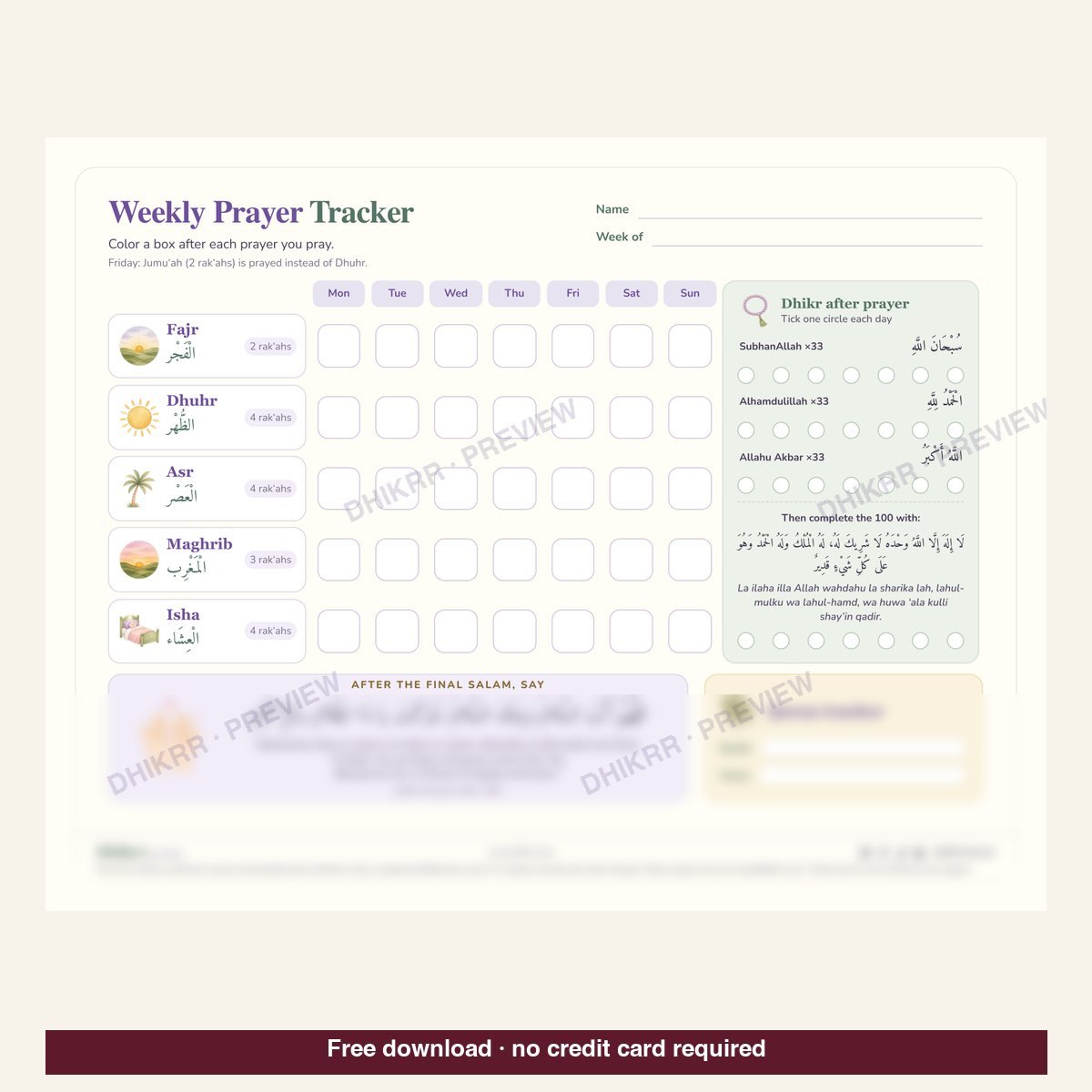
Free printable
Kids Prayer Tracker
A colorful salah chart that helps kids build the five-prayer habit.
Get it free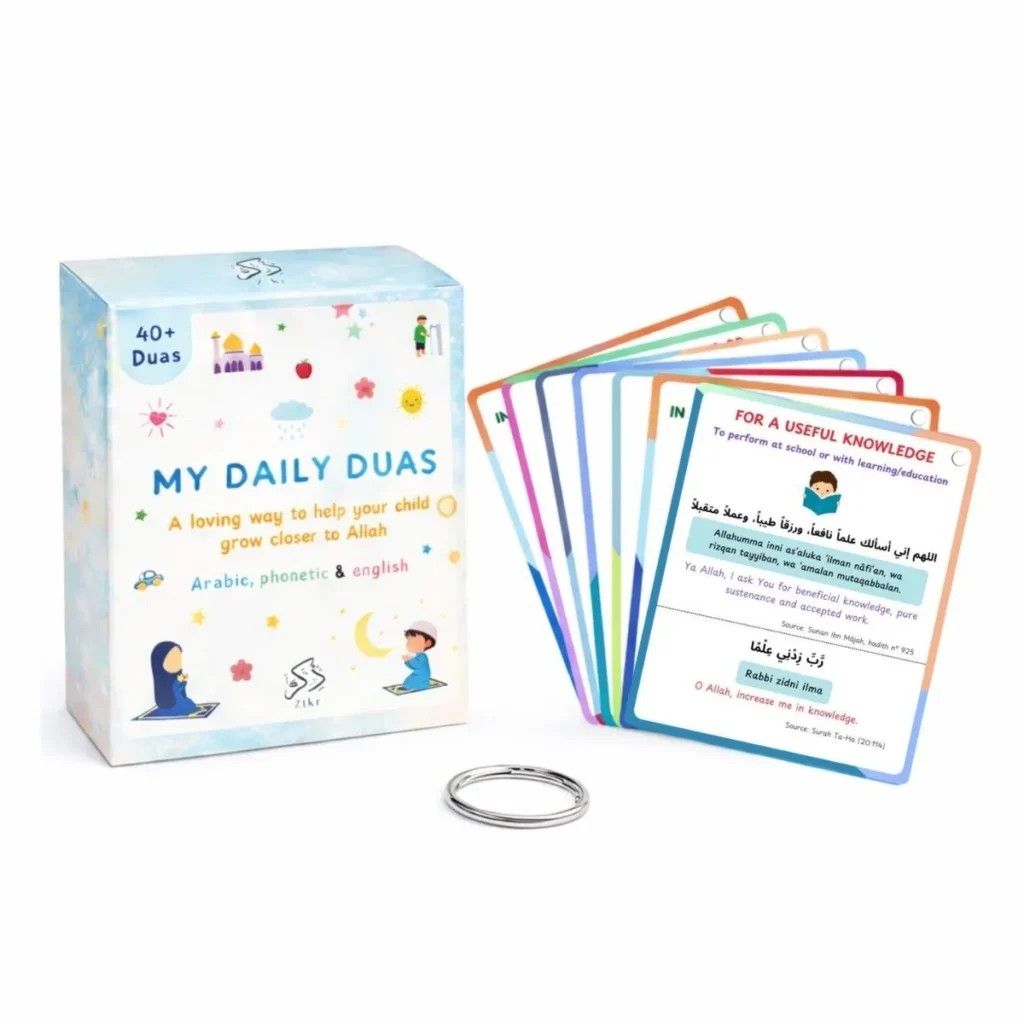
Duas for every moment
Islamic Dua Flashcards for Kids
40+ daily duas with Arabic, transliteration and English on durable cards. $7.99 instead of $10.99 on Amazon until November 30.
See the flashcardsFree printables for your family
Wudu & prayer posters, 40 Rabbana duas, duas for your child… one email unlocks the whole library – plus a personal 10% code.
Frequently asked questions
At what age should a child start praying in Islam?
The Prophet ﷺ told parents to instruct children to pray at age seven (Abi Dawud 495). Before that, children can copy their parents freely; by ten, parents should help them pray consistently.
How do I teach my child to pray if they can’t read Arabic?
Teach the short phrases by repetition (Allahu Akbar, Subhana rabbiyal-‘azim…) and Al-Fatihah verse by verse, using transliteration as a bridge while they learn the Arabic.
What if my child doesn’t want to pray?
Stay calm and consistent: pray together, keep sessions short, explain the meaning, use a reward chart and make dua for them. Pressure and shame usually push children away.

We create authentic, beautiful Islamic tools for Muslim families. Every dua and hadith we share is checked against its source.